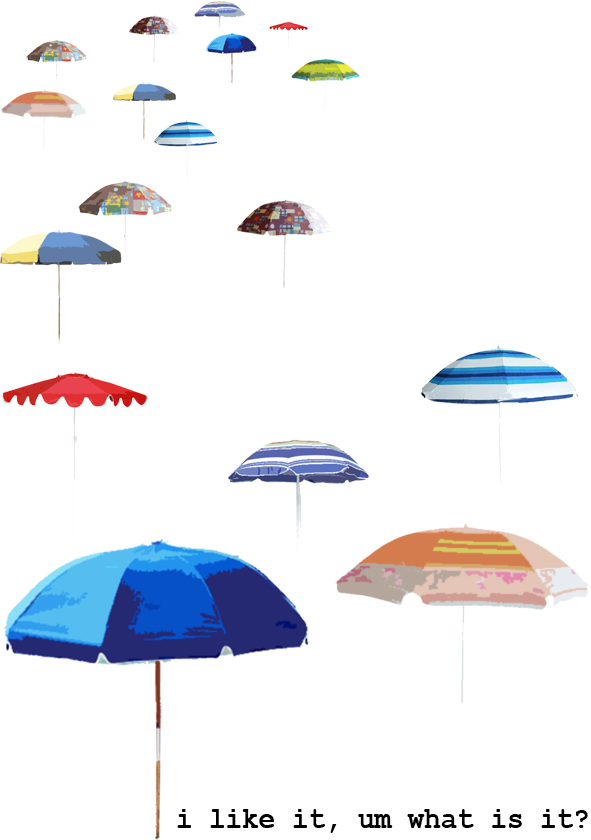
My map of Auckland consists of 3 layers, it can be read front on and sectionally.
Layer 1 - is a map of Auckland city, and is used to map out the points where those who have been contacted are at the time of contact
Layer 2 - is a the same of Auckland city, but is used to map out the point where my flat mate was at the time of contact
Layer 3 - is a map of the world, and is used to map out the points where those have been contacted outside of Auckland city are at the time of contact
By viewing this data in section the volume and location of contact made is read instantly. It can be seen that each of us contacted those closest to us notably more than those who live far away.
By viewing this data from front on we can see the parts of Auckland used the most by us. You can easily make out where our flat and university are.
Monday, November 16, 2009

Exhibition Blurb
Mass communication and information has changed the situation of the city. We need new ways of mapping to document and understand the continually changing world we live in.
Technology has made most places in world easily accessible. Our messages can arrive at almost any place instantaneously, in a sense removing all relevance of distance and time.
These invisible means of communication are creating a new sense of place. They make physical space only one of the places we can be in any one instant. This must have some effect on architecture; the solid becomes permeable, walls no longer form a barrier.
Over the course of a week I collected data from each of my flat mates. They recorded every person they text, phoned, emailed or face booked during that time.
By sandwiching the world to express the instant connection between places, I linked all of these points of communication.
Ironically, though these technologies do give us the opportunity to keep in contact with friends and family around the world, and though we all did use this technology to contact people internationally, the people we contacted the most were each other!
At the very least, what does this say about flat as a place? Some days we probably have more conversations through our cell phones then around our kitchen table.
Wednesday, November 11, 2009


Saturday, October 17, 2009
Further to our discussion
My preliminary collection of data proved I need to adjust my project. I gave each of my flat mates a log book where they were to record all the connections they made in a week. In it, they were to write:
who - they communicated with and their relationship to the person
how - they communicated with them (cellphone, internet, telephone)
when - they communicated with them (date and time)
where - they person the communicated with lives
duration - of the call or number of texts or emails sent
I was expecting to collect data that would show how we use these new forms of communication to keep in contact with those far away, but the data did not agree. Most of the contact made was between people living the same city (and even the same house!).
There are 2 ways I can move forward.
1 - To collect data from a different range of people (different ages, jobs, locations), and see if this if the data alters because of these different living conditions.
2- To concentrate on mapping my flat mates and showing the interconnectivity of a mini-network of people. (I like this idea and because there are 2 other people mapping some aspect of my flat mates it will be interesting to see how our maps link up)
I prefer option 2 because I think I will be able to explore and understand this data in more depth. I hope by mapping this niche collection of people I will still be able to question the effect invisible connections are having on architecture.
Monday, September 28, 2009

Wednesday, September 9, 2009

Wednesday, August 26, 2009
Invisible Transmissions - Chris Speed
A live visualisation of email activity into a building at the University of Plymouth. Special software was used to check the recipients email ‘inbox’ and record the names of people who have sent an email to an occupant.
The senders name was linked to their physical location on campus (using a phone directory), then their office was architecturally simulated and flown into the scene and attached to the recipient's office.
This is an interesting way to display email activity and is beginning to address the non-physical nature of this type of communication
http://www.youtube.com/watch?v=e_12RomtiZ8
The senders name was linked to their physical location on campus (using a phone directory), then their office was architecturally simulated and flown into the scene and attached to the recipient's office.
This is an interesting way to display email activity and is beginning to address the non-physical nature of this type of communication
http://www.youtube.com/watch?v=e_12RomtiZ8
Subscribe to:
Posts (Atom)